« Why is this sculpture 2,000 euros and that one 8,000? » It is the most legitimate question there is, and one of the least explained in the art market. Here, in full transparency, is how the price of a work is established at ARTDELION.
What a sculpture’s price is built on
Several objective factors come into play: the dimensions and weight of the work (a monumental two metre piece demands neither the same labour nor the same materials as an intimate one), the technical complexity of the assemblage (forging, welding, stone cutting), the rarity of the materials, and the time spent making it. To that is added the artist’s path: exhibitions, how long the practice has run, recognition.
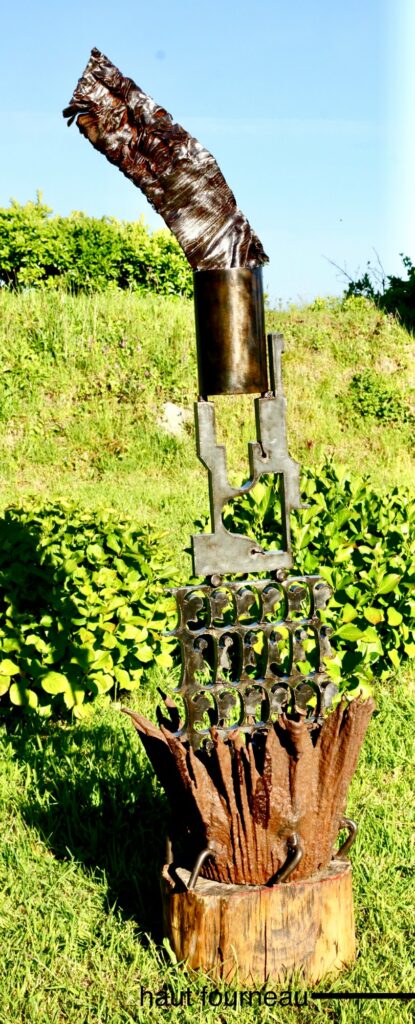
An artist’s standing: something built over time
The market standing of a living artist is built sale after sale. Each documented acquisition, with its price, its date and its subject, becomes a reference for the next. This is one of ARTDELION’s roles as an agency: to develop its artists’ standing with method and consistency, in the interest of the artist and of the collectors who supported them early.
Why we display fixed prices
In our shop, every work shows its price. That choice of transparency protects everyone: the collector knows exactly what to expect, the artist knows what their work is worth, and the market is built on clear references rather than on opaque negotiation. The displayed price is the price of the work; only shipping, calculated by destination and format, is added at the final stage.
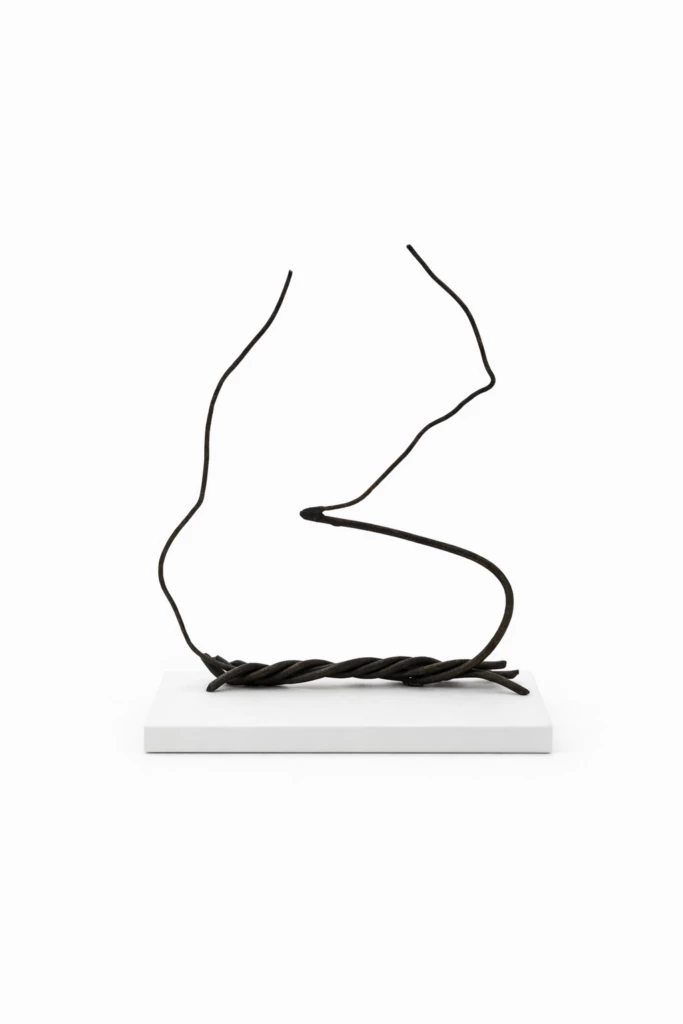
A fair split between artist and agency
ARTDELION acts as agent: the contract of sale is concluded between you and the artist, and we receive a commission agreed contractually with each artist before anything is offered for sale. The greater part of the price therefore goes to the maker. That is the condition of a healthy and durable art market.
Two examples, as orders of magnitude
The principles stay abstract without figures. Here are two cases, given as orders of magnitude and not as a price list.
An intimate piece. Around thirty centimetres, a few kilos, an assemblage of two or three elements, a few days of intermittent work. You are between one and three thousand euros depending on the artist and the subject. Here the price is carried mainly by the artist’s standing and the quality of the assemblage, hardly at all by the material.
A monumental piece. Over two metres, several tens of kilos, a structure that has to stand on its own, weeks of work and a handling constraint at every stage. You are then between six and twelve thousand euros. Here material and time weigh as much as the signature.
Between the two the ratio is not proportional to size. A piece twice as large is not twice as expensive, it is often three or four times as expensive, because difficulty grows faster than volume.
What does not make the price
Three received ideas, to be set aside.
The cost of materials. With both our artists the material is found. It costs almost nothing to buy. What costs is the time to find it, move it and understand it.
Resemblance to a famous work. A piece that recalls a well known artist is not worth more for that reason. It is often worth less, because it is less identifiable.
Announced rarity. Every unique piece is rare by definition. That says nothing about its value. The rarity that counts is that of an artist whose production is coherent and documented.
How to tell whether a price is fair
Four checks, doable in ten minutes.
Is the price displayed publicly, or given case by case? A public price commits the seller.
Are there other works by the same artist, in comparable formats, at coherent prices? A complete catalogue allows that comparison, a selection of ten pieces does not.
Does the seller explain their commission? If they refuse, the question of the split between artist and seller stays unanswered.
Has the price moved in the last six months? A price cut to close a sale devalues the artist and every piece already acquired by somebody else.
An investment? First of all something you love
A work of art can gain in value, and