Representing, put like that, means nothing. The word covers a sequence of fairly unspectacular tasks, none of which has anything to do with inspiration. Here is what the work of an artist agency actually involves, in the order things are done.
Step 1, the inventory
It all starts with a count. An artist who has been producing for twenty or thirty years does not know the exact number of their works, no longer remembers which were sold, given, lent or destroyed, and has photographs scattered across three hard drives.
The inventory means establishing a single list, with a stable reference for every piece. That reference will never change again. It is the condition for everything else holding together: an article, an exhibition, an invoice and an insurance policy then speak about the same thing.
Step 2, measurement and materials
Then comes the tedious part. Every work is measured in height, width and depth, and its materials named precisely. Forged metal is not welded steel. Breton stone is not granite. Plywood is not board.
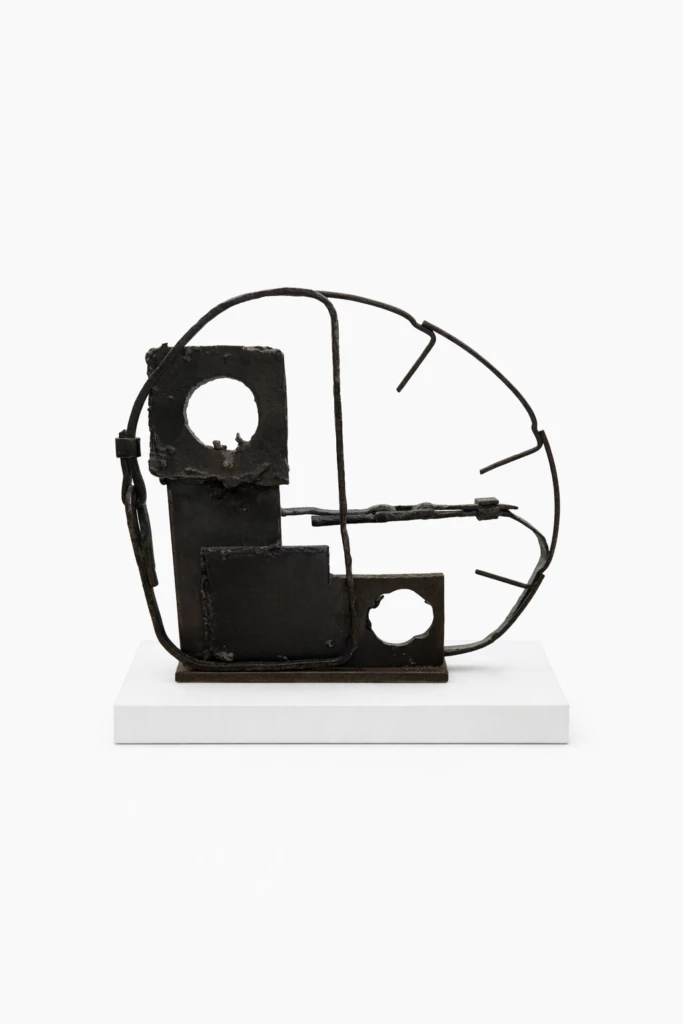
That exactness serves two very concrete people: the one who has to plan where the piece will stand, and the one who has to move it. An error of ten centimetres is paid for on delivery.
Step 3, photography
A badly photographed work is an invisible work. What matters is not the equipment but three settings: a neutral background, a light that does not cut the piece in two, and a frame that shows the whole work without clipping it.
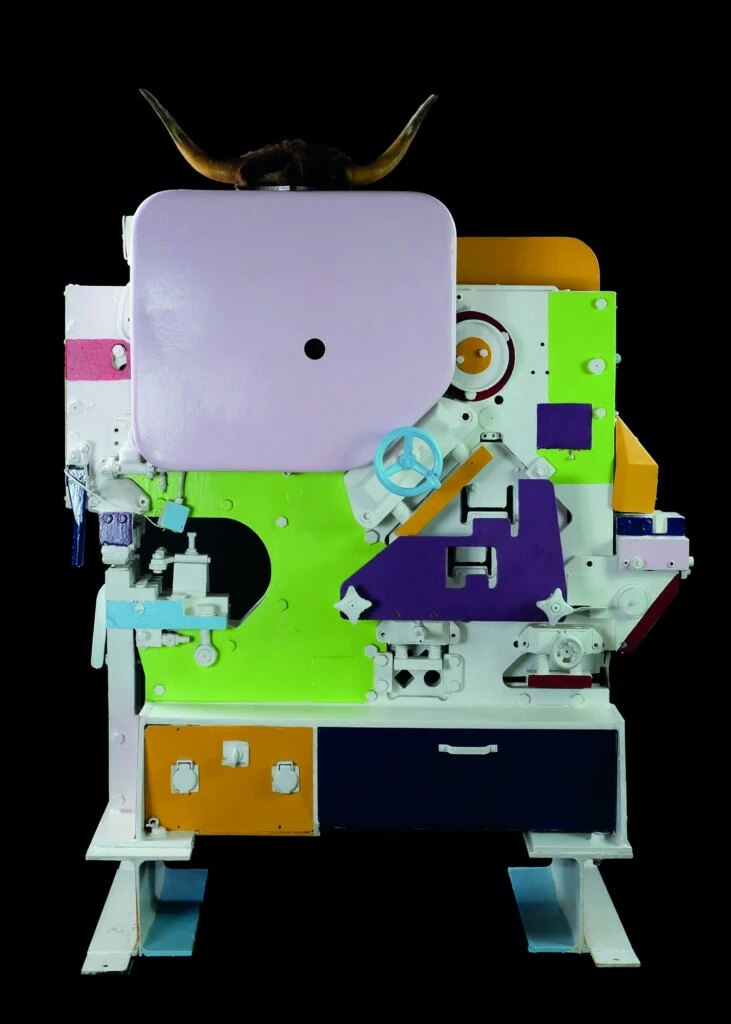
A sculpture generally needs several views, because it changes completely with the angle. A painted piece needs faithful light, otherwise the colour on screen is not the one that arrives at the buyer’s door.
Step 4, the note
Each work gets a short text, a few lines, saying what you are looking at and why the piece exists. It is neither art criticism nor a sales pitch. It is what an artist would say if they were standing next to you, in thirty seconds.
The wider story belongs elsewhere, in the biography, where a path, a studio, a material can be explained. Mixing the two produces unreadable catalogues.
Step 5, publication
The whole is then published, in full, work by work. Not a selection of twenty pieces but the complete catalogue, including what is not for sale. Each work has its own page, its own title and its own address, so that it can be found, cited and shared.
That is the principle behind ARTDELION’s two catalogues, Pierre Le Caër’s and Gabriel Lemaire Sicre’s, both reachable from the catalogues page, and available in French and in English.
Step 6, going on sale, where that applies
Not every work is for sale, and that is information in itself. Those that are join the shop, with a displayed price, a written quotation, a secure payment, an insured delivery and a certificate where the artist issues one.
Step 7, keeping the catalogue alive
A catalogue goes out of date. A piece sells, another is born, a photograph is retaken, an exhibition is added. Without regular upkeep the whole thing becomes wrong within eighteen months, and a wrong catalogue does more harm than no catalogue.
That is why an agency is judged less on what it promises at the outset than on the state of its pages three years later.
What stays with the artist
None of this touches the work itself. The artist goes on choosing what to make, what to show and what to refuse to sell. The agency page explains how ARTDELION works, and artists who wish to be represented will find the criteria for representation set out, then the application page. For a specific question, contact is direct.